Showing posts with label Birds. Show all posts

5/28/10

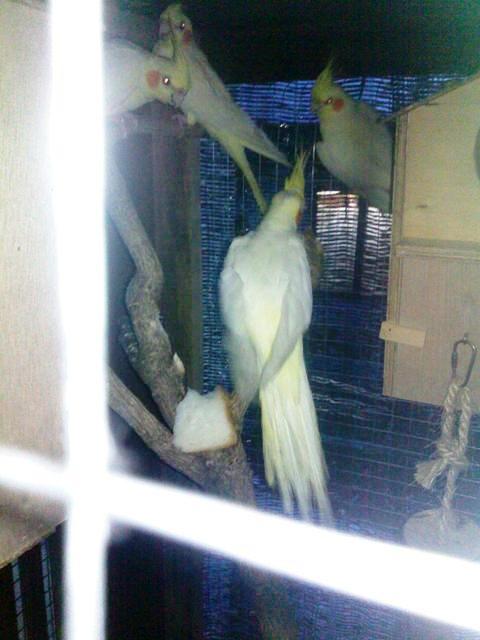
3 Pearl Cockatiel Added To My Family

Baru seminggu beli lagi 3 tiel, kali ni pearl lak aku campurkan
sama-sama ngan lutino dan normal grey aku.
Tiel ni kategori wild dan aku dapat dari seller yg sama aku
dapat lutino tiel aku dulu, harap-2 lepas ni aku dapat hasilkan
kacukan cockatiel yang cantik..amin........

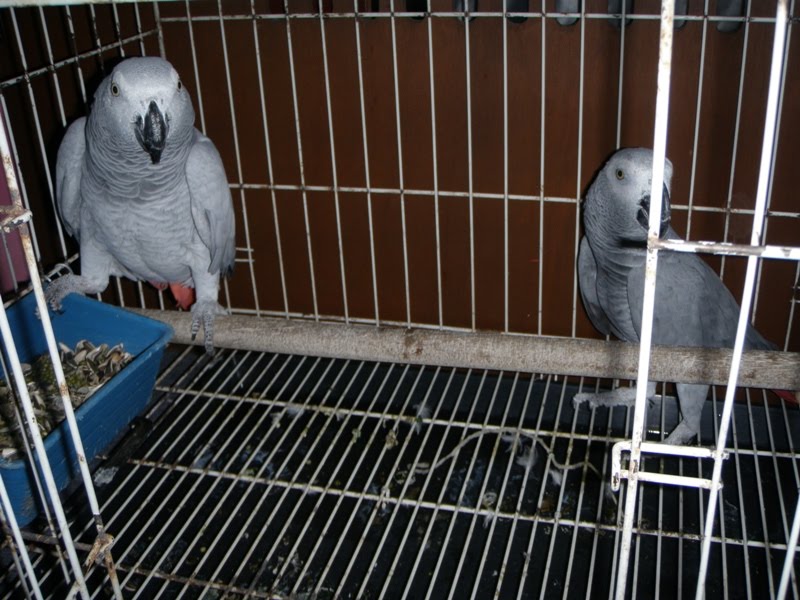
Congo African Grey

New members in my family, baru je beli 2 ekor congo african grey ni.
Umur 2 tahun dan jinak-2 merpati, tak mematuk, boleh suapkan makanan lagi.
Cuma kekadang diaorang macam takut-takut lagi ngan aku, maybe tak biasa
lagi kot, lagipun belum sampai 3 hari dok ngan aku. Yang best dan tak tahannya
bunyi CAG ni macam-2 dia bleh tiru tapi giler kuat sound dia, boleh terkejut dari tido,hehehe.

5/16/10

Cockatiel Sexing

Ni ada sedikit info yang aku dapat dari web cara-cara menentukan jantina cockatiel. Boleh la usha-2 ye sebagai panduan supaya tak salah pilih. Bagi aku setakat sekarang aku pastikan jantina dengan warna tompok merah (patches) pada pipi, yang terang jantan dan pudar betina atau warna muka yang boleh dikatakan 90% kuning dan betina selalunya kurang. Kalau dua cara ni gagal baru aku tunggu dia bersiul dan selalu yang betina tidak berlagu, seperti menjerit tapi jantan lebih banyak melodi atau bunyi. Tapi kalau white face atau albino aku memang fail untuk membezakan jantan dan betina, kena ikut kata Tan Sri P.Ramlee kot "Kalau si jantan nampak si betina, apa dibuatnye?? Dikejarnya lah.....". Boleh refer pada otai-2 atau pakar-2 burung sebab aku ni pon baru sehari jagung je ilmu pasal burung ni.
=======================================================


The below feature some of the available cockatiel mutations and sexing information is also provided whenever available. However, keep in mind that immature birds look alike and it is difficult to sex cockatiels until they have been through their first molt and the adult coloring shows, which usually occurs when they are six to nine months of age. Other than the visual sexing that can be performed on mature birds, some breeders also check the pelvic bones as means of sexing a bird. The basic idea is that the pelvic of female cockatiels are more flexible and further apart -- as the egg has to be able to pass through it. It is actually pretty similar to the difference seen in human males and females.. Women usually have wider pelvic bones than males. This applies to cockatiels as well. However, just as is the case with humans, females can have "boyish" figures with narrow hips; and some males have wider hips. This also applies to cockatiels. Additionally, immature birds have wider pelvic bones. This all makes this method of sexing "iffy" at best. A lot of the excitement for cockatiel breeding can be explained by the many beautiful mutations that have occurred over the years. Starting with the normal grey, then pieds, cinnamons, lutinos and pearlies have resulted from matings. Later on white-faces, silvers and albinos have stirred up excitement in aviculture. Recently an orange-crested cock with the orange cheek patch extending into the face and crest has occurred. Breeders are waiting to see what mutation will pop up next, which explains the enthusiasm and joy they get from their hobby of breeding cockatiels.


Personality Differences:
Males tend to be more vocal than females, whistling more than their female counterparts.
Males tend to strut around - they lift their wings slightly, stick their chest out and parade and strut, normally calling at he same time.
Females are usually pretty quiet and are more likely to hiss and bite


Visual Differences:

Normal Grey
The Normal Grey is the original bird native to Australia. The male Normal Grey has grey feathers over his entire body, with the exception of the white wing bars, yellow face and bright orange cheek patches. Both sexes have those broad white bars along the edge of each wing. Females and young cockatiels (before 1st molt) have dull orange cheek patches; their faces are not bright yellow, but more grey with some yellowish infusion. The tail feathers have a white or yellow barring on the underside. If your normal grey cockatiel has a few white or yellow feathers on the back of his or her neck and head, your cockatiel is split to the recessive mutation Pied.

Lutino / Pied, Pearly Cockatiels
Lutinos: The Lutino is a yellow-white bird with orange cheek patches and red eyes - unless they are pied -like the one to the right is as you can see a little grey patch on his/her shoulder - which would make him a "light-pied as opposed to the normal pied, which will have heavy grey markings. In lutinos, baldness can occurs behind the crest. The bald spots were especially pronounced when the lutino mutation was first bred and in the following years after that. A lot if inbreeding of this mutation caused this undesirable bald patch, which doesn't diminish the tiel's pet quality - but is not a desired trait for breeding. Breeders have been working on reducing / eliminating the bold patch and have shown great success in doing so. It is very hard to distinguish mature cocks from hens. Although yellow barring on the underside of the tail are visible in females.
Lutino Pearl: The plumage is white with yellow pearling.  
Pieds: This is a striking combination of yellow or white with light or dark grey. The amounts and placement of color vary widely. Even, symmetrical marking is desirable.
Pearly Pied: The colors are the same as the pied with the pearling only on portions of the wings. The bird is clear yellow or white, with areas of grey over the rest of the body.
Yellow-cheeks: Male birds have yellow faces with gold cheek patches.
Pastel. Male birds have yellow faces with peach cheek patches.

Cinnamon / Pearly / Fallows
Cinnamon: This mutation is similar to the normal with grey areas replaced by tan to cinnamon brown color.The Cinnamon mutation gets it name from the cinnamon color, which has been described as a brownish-grey color.
The male Cinnamon Cockatiel develops a bright yellow face (also know as the mask) and bright orange cheek patches after his first molt. Female Cinnamon cockatiels retain their dull orange cheek patches. Their faces do not turn yellow, and they have either white or yellow barring on the underside of their tails.

Cinnamon Pieds: The overall plumage is a combination of cinnamon brown and yellow, again varying in intensity of color and placement of markings.
Cinnamon Pearlies: The pearled feathers are yellow edged with the various shades of cinnamon.
Cinnamon Pearly Pieds: This mutation is similar to the pearly pieds with cinnamon brown over areas that would otherwise be grey.
Pearly: The "term" pearly refers to the lacings or pearl spots of yellow or white on the backs, nape, and wings. Yellow Pearls are sometimes called Golden Pearls. White pearling is sometimes called Silver Pearl. Pearling in a whiteface cockatiel is always white.The lacings should be extensive and consistent.
Females retain their pearly coloration into adulthood, while male lose their pearlings after their first molt (turning into a Pied cockatiel - rather than pearly pied).
Fallows: The body color is a very pale cinnamon suffused with yellow, the face yellow and the eyes red.
Olives: Feathers have a green wash and a light spangling pattern.

Whitefaces / Albinos / Silvers

This beautiful whiteface mutation lacks the orange cheek patch and yellow pigmentation. Mature adult males have a white face as opposed to the yellow mask typical of the other varieties. Some of the more beautiful combinations include the Albino (all white), Pied Whiteface, Cinnamon Pied Pearly, Pearly Whiteface, and several others.

Albinos: Is pure white with no color what so ever. Eyes are red. In females, barring is visible on the underside of the tail .
Silver Mutation: The plumage is a light, silvery grey. The eyes are red.
Single-factor dominant silver. Feathers are a darker metallic silver, with orange check patches and black eyes, feet and beak (except in pieds, which have flesh-colored feet and beaks. A skullcap of darker pigmentation is visible on the head.
Double-factor dominate silver. Same as single-factor dominant silver, except feathers are a light metallic silver.

5/14/10

Update Cockatiel

Baru ni aku dah tambah sekor lagi cockatiel betina normal grey
yang sangat jinak dengan harga yang sangat berpatutan

Ni pulak nak update yang lutino tiel aku yang mengeram dah menetas
Alhamdulillah.....harap-2 semua telur dia menetas

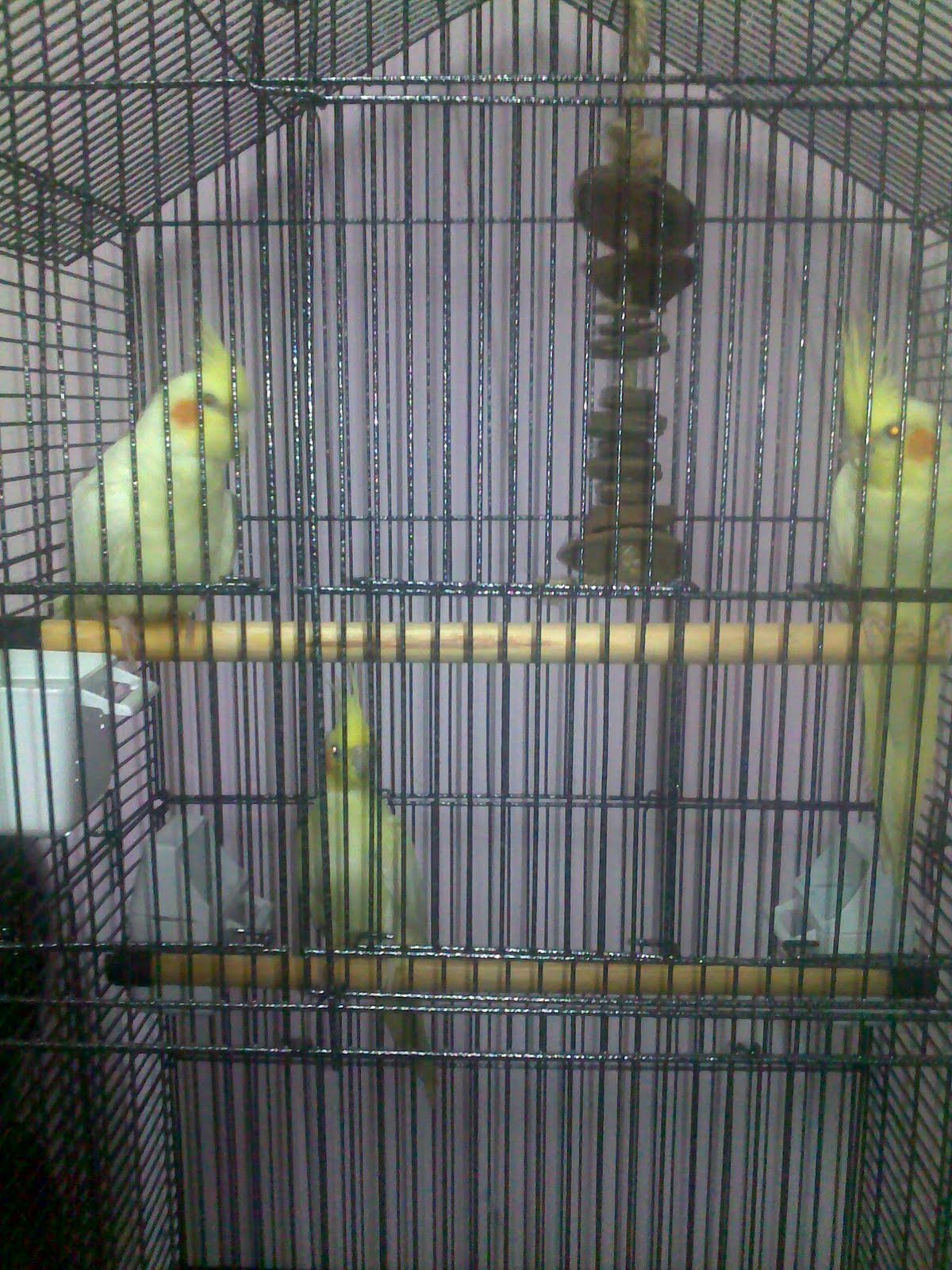
Ni la setup cage aku, hand made je, boleh la untuk sementara sebab
ruang yang ada amat terhad

4/29/10

Burung-Burung Dah Menjadi


Lama jugak aku tak update citer kat sini, sibuk sikit dengan pindah office
dan balik keje layan semua "anak-anak buah" yang dah ramai tu,
penat dah rasanya,hehehehe. Burung-2 budgie aku dah sampai masa
membiak, ada yg dah menetas ada yg tgh mengeram
dan ada yg tgh bertelur, harap2 semua menjadi. Cockatiel aku 
pun sekor tengah mengeram dan harapan aku pun semua telur menetas
dan dapat baby tiel yang sihat. Nah, usha la gambar-2  yang sempat aku snap kejap tadi.
   Albino Budgie dan 3 ekor baby
 
Blue Spangle Budgie sedang mengeram

Koleksi Lutino Cockatiel, ada 5 ekor
Lutino Tiel yang sedang mengeram
---------------------------------------------------------------------------------
Ni pulak Budgie Untuk Dijual, 
Sorry, ALL SOLD!!! Thanks

4/2/10

Budgie aku

Budgie ni semua tengah musim mengawan, 2 female dah start keluar masuk nestbox
siapkan sarang. Semua dah makin jinak, asal nampak aku bawak roti basah bleh 
lepak makan kat tangan dah, dulu jangan harap la....
Nah usha sikit gambar.....


Lutino Cockatiel Baru Tame Punyer


Baru jer beli tadi dari putrajaya, yg sekor ni puas main sebab jinak sangat cuma sayang ekor 
dah rabak dan sayap dah kena klip tapi terlebih sudah klipnyer, sampai habis sebelah tu sampai 
ujung, tapi takpelah, pencinta haiwan la katakan.....yang dua ni plak jinak-jinak merpati, masih
kurang serasi kot tapi jinak la gak


3/24/10

Baby Cockatiel

Ni ha aku nak share baby cockatiel umur dalam 2 minggu yang aku baru beli.
Saje nak try handfeed supaya jadi supertame, senang nak main-2 ngan dia
dalam rumah. Seronok jugak la cuma penat nak kena suapkan 3-4 jam sekali.

2/26/10

Cockatiel

Ni koleksi baru aku, hehehe ushaaa


1/24/10

Budgerigar Atau Budgie

Sedikit info tentang burung budgie, buat masa sekarang aku pun cuma ada 3 ekor je dan baru 4-5 bulan cuba membela burung ni, ada sky blue, colbat dan albino. Ni ada sedikit info pasal budgie yang aku ambik dari wikipedia, bleh la usha-usha yer.

Info Taken From http://en.wikipedia.org/wiki/Budgerigar%20

Apa Itu Budgie?

The Budgerigar (Melopsittacus undulatus), (parakeet, shell parakeet, budgerigah, budgie, or common pet parakeet in US English) is a small parrot and the only species in the Australian genus Melopsittacus. A small long-tailed predominantly green and yellow bird with black scalloped markings on the wings and shoulders in the wild, the Budgerigar has been bred extensively with a profusion of colour forms resulting. Thus, aviary birds may be blue and white, all yellow, all white, or various other combinations thereof. Some have even been bred with small crests. In the wild, it is a predominantly seed-eating species. The budgerigar is found throughout the drier parts of Australia and has survived for the last five million years in the harsh inland conditions of that continent.

Diet Untuk Budgie

Pet budgerigars eating fruit. Although budgerigars in their natural-habitats of Australia eat mainly grass seeds, captive budgerigars feed on either dry, sprouted and/or soaked seeds. A diet of only dry seeds is inadequate for budgerigars and/or any parrot species' optimum health. Avian veterinarians recommend pet birds' diets be supplemented with foods such as:
  • Whole Cereals and whole Grains : Amaranth, Barley, Couscous, Flax, whole-grain Pastas, Oat, Quinoa (truly a Fruit but used as a Cereal), whole-Wheat, Wild-Rice, whole Rices.
  • Edible Blossoms and Flowers: Carnations, Chamomille, Chives, Dandelion, Day Lilies, Eucalyptus, Fruit tree's blossoms, Herbs' blossoms, Hibiscus, Honeysuckle, Impatiens, Lilac, Nasturiums, Pansies, Passion Flower (Passiflora), Roses, Sunflowers, Tulips, Violets. Note that the leaves of some of these plants are poisonous to budgies.
  • Greens and/or Weeds:
    • mainly ; Bok-Choi, Broccoli and/or Cauliflower leaves, Cabbage leaves, Collard greens, Dandelion leaves, Kelp, Mustard leaves, Seaweeds, Spirulina, Water cress.
    • occasionally and sporadically ; Amaranth leaves, Beet leaves, Carambola (Starfruit), Chards, Parsley, Spinach and Turnip leaves. All of these feature high Oxalic-Acid contents that induces production of Calcium Oxalates (crystals/stones) by binding Calcium and other trace Minerals present in foods and goods with which they're ingested. Possibly, leading to Calcium deficiencies and/or Hypocalcemia in minor cases. Liver's &/or other internal organs' damage or failure in more severe cases.

  • Fruit (except Avocados which are toxic): all Apple varieties, Banana, all Berries varieties, all Citrus varieties, Grapes, Kiwi, Mango, Melons, Nectarine, Papaya, Peach, all Pear varieties, Plum, Star-fruit. Pits and seeds from every Citrus and Drupe species must always be discarded as they are intoxicating. However, achenes and tiny seeds from pseudo and true Berries (Bananas, Blueberries, Elderberries, Eggplants, Persimmons, Pomegranates, Raspberries, Strawberries, Tomatoes) are all okay.
  • Legumes: Almonds, Beans, Lentils, Peas, Nuts and Tofu.
  • Grain and/or Legume sprouts: Adzuki beans, Alfalfa beans, Buckwheat, Lentils, Mungo beans, Pinto beans, Red Kidney beans, Sesame seeds, Sunflower seeds. Caution with only Lima and Navy beans' sprouts which are toxic.
  • Vegetables (except Uncooked Potatoes, Uncooked Onions and all Mushrooms): Beet, Broccoli, Cauliflower, Carrots, Cucumber, all Cabbage varieties, fresh Beans, fresh Romane Lettuce, fresh Peas, Parsnip, all Pepper varieties, all Squash varieties, Sweet potatoes, Tomato, Turnip, Yams, Zucchini.
  • Pellets specifically formulated for budgerigars, for Australian grass budgerigars and/or for small parrots are all healthy additions.
  • Other fat-free, healthy and nutritious human foods.
Adding these foods provides additional nutrients and can prevent obesity and lipomas, as can substituting millet, which is relatively low in fat, for higher-fat seed mixes. Adult budgerigars often do not always adapt readily to dietary additions, so care must be taken to introduce healthy diets as young as possible (ideally weaned onto fresh foods before introducing chicks onto seeds). Parrots and budgerigars learn mainly by mimicry and thus most adult budgerigars will be easily encouraged to try new foods by observing another bird eating the food, or by placing the new food on a mirror.
Parrot species (including budgerigars) are herbivores. Consequently, they should be fed plant-based diets that are ideally supplemented with vegetable proteins, for example, produced by a combination of any type of whole grain with any type of legume. Eggs (hard-boiled and/or scrambled) are the only appropriately healthy source of animal protein, mostly for birds in either breeding, growing, moulting and/or recovering conditions. High levels of proteins (particularly animal proteins) are unhealthy for budgerigars and other Grass Parakeet species living under any alternate conditions (i.e. non-breeding, pets).
Alcohol, avocado, chocolate, caffeine, products containing lactose, garlic and onions present a danger of toxicosis and should not be fed.
The wild budgerigar has evolved alongside the Eucalyptus tree and over a million years has developed an intimate bond with the tree and its leaves. Wet eucalyptus leaves excite and invigorate both the wild and captive budgerigar. They love to bathe in the wet leaves and breeding females destructively chew the bark. The eucalyptus oil from the leaves has medicinal properties that stimulate the immune system and promote a strong natural resistance to disease.


Macam Mana Nak Kenalpasti Jantina Budgie?

Cara paling mudah adalah kenalpasti warna 'cere'. 'Cere' berasal dari perkataan latin dan selain dari burung dari keluarga parrot, burung seperti helang dan merpati juga mempunyai 'cere'. Ini adalah contoh yang saya ambil dari laman web bagi memudahkan kawan-2 semua terutama mengenal pasti cere pada albino atau lutino.

Male budgies, as adults have bright blue ceres, or even a vibrant purple cere. As young chicks, they normally have pink ceres. In some mutations, such as pieds, lutinos, and albinos, the males normally retain a pink cere, but it is not completely unknown for some to have a tan cere (rare, but it has happened... It's also rare for one a lutino or albino to have a blue cere, but it has happened!). Here are a few photos of male budgies!


Female budgies, as adults, will have a crusty brown cere when in breeding condition, and a white cere with blue tints when out of breeding condition. Young females have white ceres with varient amount of blue in them, and possibly even tan or brown coloring. This is true for ALL mutations (even pieds, lutinos, and albinos). Here are some photos!